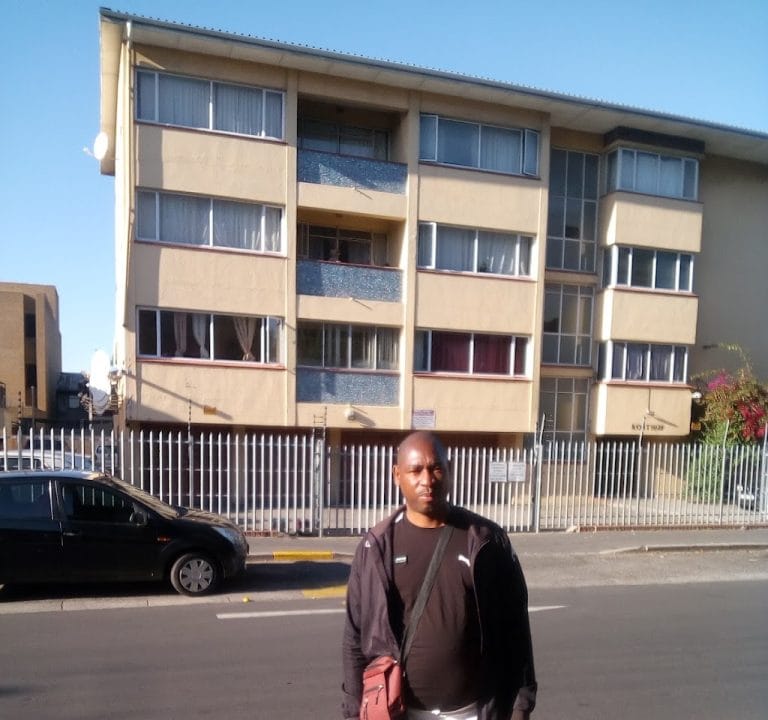
Private Security Sector Provident Fund is a Closed circuit television establishment in Johannesburg, Gauteng, South Africa
Private Security Sector Provident Fund: overview and member experience in the CCTV sector context
The Private Security Sector Provident Fund (PSSPF) operates from Johannesburg, Gauteng, serving a substantial membership within the private security industry. While the fund is not a provider of Closed Circuit Television (CCTV) installation or maintenance services, its presence in the security sector is rooted in shaping long‑term financial security for workers and their families. Established in 2002, the fund has grown to include more than 330 000 active members and manages assets in excess of R11.5 billion. These figures highlight the scale at which the fund operates within the private security landscape, encompassing retirement, disability, death and funeral benefits for eligible members and their dependants.
From the perspective of product offerings, the fund emphasises long‑term financial protection rather than immediate security solutions. Retirement benefits form a core component of the member value proposition, complemented by disability and death benefits, with a dedicated funeral benefit stream. This suite of benefits is designed to provide financial stability across life events, rather than providing on‑site security hardware or monitoring services typically associated with CCTV vendors. The fund states a commitment to improving the lives of members and their families through sustainable benefit provision and prudent governance by its Board of Trustees.
In terms of organisational scope, PSSPF reports contributions from a substantial cohort of employers—approximately 800 employers contribute to the fund, generating around R1 billion in annual contributions. This employer‑sponsored structure underpins the fund’s capacity to deliver benefits and manage retirement savings for a large workforce in the private security sector. The fund’s public‑facing materials emphasise a two‑pot system, which is aimed at balancing current benefits with long‑term retirement savings, a framework that may be of particular interest to employees working in security roles that involve shift work, overtime, and potentially variable income streams.
For visitors seeking information in the CCTV category or related security services in Johannesburg, it is important to understand the distinction between a provident fund and a security systems vendor. The PSSPF’s core activities revolve around member benefits, contributions, governance, and member communications rather than hardware installation, monitoring contracts, or technical service delivery typical of CCTV providers. Therefore, prospective clients exploring CCTV installation or maintenance should refer to qualified system integrators or security service companies specialising in video surveillance hardware and ongoing monitoring solutions in the Gauteng area.
The fund communicates important governance and contact points through its official pages and legal notices. A notable element is the legal department contact information for formal orders and notices, underscoring the importance of official correspondence in matters related to fund rules and member entitlements. Where legal or regulatory questions arise, the designated address at 108 Fox Street, Metropolitan Building, Johannesburg, 2001, is provided for formal documentation, with electronic inquiries directed to the legal email address published by the fund. This clarity around compliance and administration is a practical feature for members and employers navigating fund rules.
Typical member journeys involve eligibility criteria outlined in the fund’s rules, with automatic enrolment upon meeting those requirements. This straightforward pathway can simplify access to benefits for eligible workers in the private security sector. The fund’s publicly available information also signals a broad impact: since inception, the provision of retirement, disability, death and funeral benefits has positively affected more than two million families connected to the fund, reflecting the scale and social significance of the programme within the industry.
Practical tips for customers and prospective users in the CCTV‑oriented security space include the following:
- Clarify whether a service is a security systems installation or a financial benefit provision; the PSSPF primarily offers retirement and related benefits, not CCTV hardware or monitoring.
- Check eligibility requirements early and review the fund rules to understand membership, contributions, and benefit entitlements.
- Keep track of official communications and notices, including any changes to benefits or governance structures, through the fund’s official channels.
- For legal or formal documentation, use the stated postal address in Johannesburg and the designated legal contact email.
- If seeking CCTV services, consult specialised Gauteng‑based CCTV installers or security integrators who provide hardware, installation, and ongoing monitoring contracts tailored to business premises.
In terms of location and coverage, the fund is anchored in Johannesburg, serving members and employers across Gauteng and the broader private security sector. While the organisation’s narrative centres on financial protection and family‑support benefits, its presence within the security industry is a reminder of the integrated approach to security—combining credible financial foundations for workers with practical, on‑the‑ground security solutions from qualified service providers when CCTV or related systems are required.
Johannesburg
Gauteng
1613
South Africa


Closed Circuit Television Services in Johannesburg, Gauteng
In Johannesburg, Gauteng, closed circuit television (CCTV) services are widely utilised by commercial properties, residential estates, retail centres, and public organisations to enhance security, monitor activity, and support incident investigation. Providers typically offer a range of offerings designed to fit diverse requirements, from single-site installations to multi-camera systems spanning large urban complexes. The focus across the sector is on reliable surveillance, practical maintenance, and thoughtful integration with existing security measures.
Core service categories commonly encountered include site surveys, system design, equipment supply, installation, commissioning, and ongoing maintenance. A site survey assesses camera placement, field of view, lighting conditions, and potential blind spots. Design considerations address the choice of cameras (such as bullet, dome, or PTZ types), recording solutions, storage duration, and network requirements. Installation teams handle cabling, mounting, power supply considerations, and integration with access control systems or alarm panels where applicable. Commissioning involves testing footage quality, ensuring appropriate remote access capabilities, and validating recording reliability.
Customers can expect a mix of analogue and IP-based CCTV solutions, with emphasis on scalability and future-proofing. Analogue systems may still be used for retrofitting existing infrastructure, while IP-based installations offer higher resolution, advanced analytics, and easier remote monitoring. In practice, providers tailor the configuration to lighting conditions, weather exposure, and the level of risk at the site. For commercial environments, cameras are often positioned to cover entrances, cash handling zones, perimeters, and high-traffic corridors, while residential estates may prioritise gatehouses, parking areas, and shared amenities.
Monitoring options vary and can be either local or remote. Local monitoring involves on-site recording devices and sometimes a dedicated control room within the premises. Remote monitoring enables property managers or security teams to view live footage and receive alerts via secure connections from any authorised device. In many cases, proactive monitoring services are offered, including event notification, expedited footage retrieval, and cooperation with local authorities when incidents arise. Data protection and privacy considerations are important, with attention paid to lawful use, access controls, and appropriate retention periods for recorded material.
Practical considerations play a significant role in Johannesburg's CCTV deployments. Electrical reliability and load requirements must be planned to avoid downtime during load-shedding or power interruptions. Adequate lighting, particularly at night, enhances image clarity and reduces false alarms. Network infrastructure should support bandwidth needs for high-resolution streams, while secure remote access mitigates the risk of unauthorised viewing. Physical security of equipment, weather resistance for outdoor cameras, and regular maintenance schedules help preserve system performance.
Compliance with local and national regulations is often a factor in decision-making. While specific legal obligations may vary, organisations typically consider the admissibility of footage for investigations, retention policies, and the rights of individuals depicted in recordings. Ethical use and transparent policies regarding who can access footage, when it can be viewed, and for how long it is stored are commonly emphasised to maintain trust and minimise risk.
Costs are generally influenced by the scale of the site, the number of cameras, the complexity of installation, and the required storage capacity. Prospective customers are advised to obtain clear explanations of anticipated maintenance commitments, potential upgrade paths, and any ongoing support arrangements. While exact vendor names and price points vary, the overarching aim remains to deliver a dependable surveillance solution aligned with security objectives, site realities, and user expectations in the Gauteng province.
Sorry, no records were found. Please adjust your search criteria and try again.
Sorry, unable to load the Maps API.